

Overview
|
|
|||||||
| Annualized | |||||||
| 1 Mo. | 3 Mos. | YTD | 1 Yr. | 3 Yrs. | 5 Yrs. | 10 Yrs. | |
| Fund at NAV | -0.01 | 0.08 | 0.08 | 4.61 | -0.37 | 1.77 | 3.24 |
| Fund w/Max Sales Charge | -3.23 | -3.22 | -3.22 | 1.21 | -1.48 | 1.10 | 2.90 |
| Bloomberg Municipal Bond Index2 | 0.00 | -0.39 | -0.39 | 3.13 | -0.41 | 1.59 | 2.66 |
| Past performance is no guarantee of future results. Investment return and principal value will fluctuate so that shares, when redeemed, may be worth more or less than their original cost. Performance is for the stated time period only; due to market volatility, the Fund’s current performance may be lower or higher than quoted. Returns are historical and are calculated by determining the percentage change in net asset value (NAV) with all distributions reinvested. Returns for other classes of shares offered by the Fund are different. Performance less than or equal to one year is cumulative. Max Sales Charge: 3.25%. | |||||||
| Class A Inception | 04/05/1994 |
| Investment Objective | Current tax-exempt income |
| Total Net Assets | $4.2B |
| Minimum Investment | $1000 |
| Expense Ratio3 | 0.75% |
| Adjusted Expense Ratio | 0.67% |
| CUSIP | 27826L330 |
| Adjusted Expense Ratios excludes certain investment expenses such as interest expense from borrowings and repurchase agreements and dividend expense from short sales, incurred directly by the Fund or indirectly through the Fund’s investment in underlying Eaton Vance Funds, if applicable none of which are paid to Eaton Vance. |
| Delta Air Lines Inc | 1.03 |
| Puerto Rico Sales Tax Financing Corp Sales Tax Revenue | 0.91 |
| North Texas Tollway System | 0.9 |
| Buckeye Tobacco Settlement Financing Authority | 0.88 |
| Metropolitan Water District of Southern California | 0.85 |
| Harris County-Houston Sports Authority | 0.85 |
| Laguardia Gateway Partners LLC | 0.84 |
| Loma Linda University Medical Center Obligated Group | 0.81 |
| Hudson Yards Infrastructure Corp | 0.75 |
| Regents of the University of California Medical Center Pooled Revenue | 0.74 |
| Total | 8.55 |
| Time Period | Rating | Funds in Muni National Long Category |
| Overall | 162 | |
| 3 Years | 162 | |
| 5 Years | 153 | |
| 10 Years | 114 | |
| The Morningstar Rating™ for funds, or "star rating", is calculated for managed products (including mutual funds and exchange-traded funds) with at least a three-year history. Exchange-traded funds and open-ended mutual funds are considered a single population for comparative purposes. It is calculated based on a Morningstar Risk-Adjusted Return measure that accounts for variation in a managed product's monthly excess performance, placing more emphasis on downward variations and rewarding consistent performance. The top 10% of products in each product category receive 5 stars, the next 22.5% receive 4 stars, the next 35% receive 3 stars, the next 22.5% receive 2 stars, and the bottom 10% receive 1 star. The Overall Morningstar Rating for a managed product is derived from a weighted average of the performance figures associated with its three-, five-, and 10-year (if applicable) Morningstar Rating metrics. The weights are: 100% three-year rating for 36-59 months of total returns, 60% five-year rating/40% three-year rating for 60-119 months of total returns, and 50% 10-year rating/30% five-year rating/20% three-year rating for 120 or more months of total returns. While the 10-year overall star rating formula seems to give the most weight to the 10-year period, the most recent three-year period actually has the greatest impact because it is included in all three rating periods. Star ratings do not reflect the effect of any applicable sales load. Hollow stars denote Morningstar Extended Performance Ratings and are considered estimates based on the performance of the fund's oldest share class, adjusted for fees and expenses. ©2024 Morningstar. All Rights Reserved. The information contained herein: (1) is proprietary to Morningstar and/or its content providers; (2) may not be copied or distributed; and (3) is not warranted to be accurate, complete or timely. Neither Morningstar nor its content providers are responsible for any damages or losses arising from any use of this information. |
| Craig R. Brandon, CFA | Managed Fund since 2013 | ||
| Chris J. Eustance, CFA | Managed Fund since 2021 |
The information included herein does not reflect securities deemed to be held by the Fund pursuant to financial accounting standard 140 (FAS 140).
Portfolio profile subject to change due to active management. Percentages may not total 100% due to rounding.
RISK CONSIDERATIONS
The value of investments held by the Fund may increase or decrease in response to economic, and financial events (whether real, expected or perceived) in the U.S. and global markets. There generally is limited public information about municipal issuers. As interest rates rise, the value of certain income investments is likely to decline. Investments in debt instruments may be affected by changes in the creditworthiness of the issuer and are subject to the risk of non-payment of principal and interest. The value of income securities also may decline because of real or perceived concerns about the issuer's ability to make principal and interest payments. Investments rated below investment grade (sometimes referred to as "junk") are typically subject to greater price volatility and illiquidity than higher rated investments. The Fund's exposure to derivatives involves risks different from, or possibly greater than, the risks associated with investing directly in securities and other investments. Derivatives instruments can be highly volatile, result in leverage (which can increase both the risk and return potential of the Fund), and involve risks in addition to the risks of the underlying instrument on which the derivative is based, such as counterparty, correlation and liquidity risk. If a counterparty is unable to honor its commitments, the value of Fund shares may decline and/or the Fund could experience delays in the return of collateral or other assets held by the counterparty. The Fund is exposed to liquidity risk when trading volume, lack of a market maker or trading partner, large position size, market conditions, or legal restrictions impair its ability to sell particular investments or to sell them at advantageous market prices. The impact of the coronavirus on global markets could last for an extended period and could adversely affect the Fund’s performance. No fund is a complete investment program and you may lose money investing in a fund. The Fund may engage in other investment practices that may involve additional risks and you should review the Fund prospectus for a complete description.
Performance
|
|
|||||||
| Annualized | |||||||
| 1 Mo. | 3 Mos. | YTD | 1 Yr. | 3 Yrs. | 5 Yrs. | 10 Yrs. | |
| Fund at NAV | -0.01 | 0.08 | 0.08 | 4.61 | -0.37 | 1.77 | 3.24 |
| Fund w/Max Sales Charge | -3.23 | -3.22 | -3.22 | 1.21 | -1.48 | 1.10 | 2.90 |
| Bloomberg Municipal Bond Index2 | 0.00 | -0.39 | -0.39 | 3.13 | -0.41 | 1.59 | 2.66 |
| Morningstar Muni National Long Category6 | 0.13 | 0.23 | 0.23 | 4.25 | -0.97 | 1.34 | 2.62 |
| Past performance is no guarantee of future results. Investment return and principal value will fluctuate so that shares, when redeemed, may be worth more or less than their original cost. Performance is for the stated time period only; due to market volatility, the Fund’s current performance may be lower or higher than quoted. Returns are historical and are calculated by determining the percentage change in net asset value (NAV) with all distributions reinvested. Returns for other classes of shares offered by the Fund are different. Performance less than or equal to one year is cumulative. Max Sales Charge: 3.25%. | |||||||
| 2014 | 2015 | 2016 | 2017 | 2018 | 2019 | 2020 | 2021 | 2022 | 2023 | |
| Fund at NAV | 14.83 | 4.30 | 1.71 | 4.67 | 1.78 | 7.88 | 5.79 | 1.47 | -9.93 | 7.70 |
| Bloomberg Municipal Bond Index2 | 9.05 | 3.30 | 0.25 | 5.45 | 1.28 | 7.54 | 5.21 | 1.52 | -8.53 | 6.40 |
| Class A Inception | 04/05/1994 |
| Expense Ratio3 | 0.75% |
| Adjusted Expense Ratio | 0.67% |
| Distribution Frequency | Monthly |
| Adjusted Expense Ratios excludes certain investment expenses such as interest expense from borrowings and repurchase agreements and dividend expense from short sales, incurred directly by the Fund or indirectly through the Fund’s investment in underlying Eaton Vance Funds, if applicable none of which are paid to Eaton Vance. |
| Distribution Rate at NAV | 3.65% |
| Taxable-Equivalent Distribution Rate at NAV8 | 6.17% |
| SEC 30-day Yield9 | 3.29% |
| Taxable-Equivalent SEC 30-day Yield | 5.56% |
| Time Period | Rating | Funds in Muni National Long Category |
| Overall | 162 | |
| 3 Years | 162 | |
| 5 Years | 153 | |
| 10 Years | 114 | |
| The Morningstar Rating™ for funds, or "star rating", is calculated for managed products (including mutual funds and exchange-traded funds) with at least a three-year history. Exchange-traded funds and open-ended mutual funds are considered a single population for comparative purposes. It is calculated based on a Morningstar Risk-Adjusted Return measure that accounts for variation in a managed product's monthly excess performance, placing more emphasis on downward variations and rewarding consistent performance. The top 10% of products in each product category receive 5 stars, the next 22.5% receive 4 stars, the next 35% receive 3 stars, the next 22.5% receive 2 stars, and the bottom 10% receive 1 star. The Overall Morningstar Rating for a managed product is derived from a weighted average of the performance figures associated with its three-, five-, and 10-year (if applicable) Morningstar Rating metrics. The weights are: 100% three-year rating for 36-59 months of total returns, 60% five-year rating/40% three-year rating for 60-119 months of total returns, and 50% 10-year rating/30% five-year rating/20% three-year rating for 120 or more months of total returns. While the 10-year overall star rating formula seems to give the most weight to the 10-year period, the most recent three-year period actually has the greatest impact because it is included in all three rating periods. Star ratings do not reflect the effect of any applicable sales load. Hollow stars denote Morningstar Extended Performance Ratings and are considered estimates based on the performance of the fund's oldest share class, adjusted for fees and expenses. ©2024 Morningstar. All Rights Reserved. The information contained herein: (1) is proprietary to Morningstar and/or its content providers; (2) may not be copied or distributed; and (3) is not warranted to be accurate, complete or timely. Neither Morningstar nor its content providers are responsible for any damages or losses arising from any use of this information. |
| Date | NAV | NAV Change |
| Apr 26, 2024 | $9.15 | $0.00 |
| Apr 25, 2024 | $9.15 | -$0.04 |
| Apr 24, 2024 | $9.19 | -$0.01 |
| Apr 23, 2024 | $9.20 | $0.01 |
| Apr 22, 2024 | $9.19 | $0.00 |
| Apr 19, 2024 | $9.19 | $0.00 |
| Apr 18, 2024 | $9.19 | $0.00 |
| Apr 17, 2024 | $9.19 | $0.00 |
| Apr 16, 2024 | $9.19 | -$0.03 |
| Apr 15, 2024 | $9.22 | -$0.01 |
| Ex-Date | Distribution | Reinvest NAV |
| Mar 28, 2024 | $0.02877 | $9.30 |
| Feb 29, 2024 | $0.02948 | $9.33 |
| Jan 31, 2024 | $0.02895 | $9.36 |
| Dec 29, 2023 | $0.02945 | $9.38 |
| Nov 30, 2023 | $0.02939 | $9.15 |
| Oct 31, 2023 | $0.02908 | $8.55 |
| Sep 29, 2023 | $0.02870 | $8.75 |
| Aug 31, 2023 | $0.02803 | $9.06 |
| Jul 31, 2023 | $0.02753 | $9.21 |
| Jun 30, 2023 | $0.02777 | $9.21 |
| View All | ||
| No records in this table indicates that there has not been a distribution greater than .0001 within the past 3 years. Fund prospectus |

| Ex-Date | Short-Term | Long-Term | Reinvest NAV |
| No records in this table indicates that there has not been a capital gain greater than .0001 within the past 3 years. Fund prospectus |
Portfolio profile subject to change due to active management. Percentages may not total 100% due to rounding.
RISK CONSIDERATIONS
The value of investments held by the Fund may increase or decrease in response to economic, and financial events (whether real, expected or perceived) in the U.S. and global markets. There generally is limited public information about municipal issuers. As interest rates rise, the value of certain income investments is likely to decline. Investments in debt instruments may be affected by changes in the creditworthiness of the issuer and are subject to the risk of non-payment of principal and interest. The value of income securities also may decline because of real or perceived concerns about the issuer's ability to make principal and interest payments. Investments rated below investment grade (sometimes referred to as "junk") are typically subject to greater price volatility and illiquidity than higher rated investments. The Fund's exposure to derivatives involves risks different from, or possibly greater than, the risks associated with investing directly in securities and other investments. Derivatives instruments can be highly volatile, result in leverage (which can increase both the risk and return potential of the Fund), and involve risks in addition to the risks of the underlying instrument on which the derivative is based, such as counterparty, correlation and liquidity risk. If a counterparty is unable to honor its commitments, the value of Fund shares may decline and/or the Fund could experience delays in the return of collateral or other assets held by the counterparty. The Fund is exposed to liquidity risk when trading volume, lack of a market maker or trading partner, large position size, market conditions, or legal restrictions impair its ability to sell particular investments or to sell them at advantageous market prices. The impact of the coronavirus on global markets could last for an extended period and could adversely affect the Fund’s performance. No fund is a complete investment program and you may lose money investing in a fund. The Fund may engage in other investment practices that may involve additional risks and you should review the Fund prospectus for a complete description.
Portfolio
|
|
|
| Municipal Bonds | 98.48 |
| U.S. Corporate Bonds | 1.07 |
| Collateralized Mortgage Obligations | 0.44 |
| Cash | 0.01 |
| Total | 100.00 |
| Number of Holdings | 435 |
| Average Coupon | 4.70% |
| Average Maturity | 18.24 yrs |
| Average Effective Maturity | 10.00 yrs |
| Average Duration | 7.07 yrs |
| Average Call | 5.71 yrs |
| Average Price | $101.93 |
| % Subject to AMT | 16.85 |
| Transportation | 20.05 |
| General Obligations | 16.68 |
| Hospital | 12.48 |
| Special Tax Revenue | 9.74 |
| Water and Sewer | 5.87 |
| Education | 5.79 |
| Other Revenue | 5.12 |
| Electric Utilities | 4.75 |
| Housing | 4.29 |
| Lease Revenue/Certificates of Participation | 3.36 |
| View All |
|
|
|
| AAA | 13.82 |
| AA | 52.82 |
| A | 19.14 |
| BBB | 6.30 |
| BB | 2.41 |
| B | 0.00 |
| CCC or Lower | 0.00 |
| Not Rated | 5.51 |
| Total | 100.00 |
| Ratings are based on Moody's, S&P or Fitch, as applicable. If securities are rated differently by the ratings agencies, the highest rating is applied. Ratings, which are subject to change, apply to the creditworthiness of the issuers of the underlying securities and not to the Fund or its shares. Credit ratings measure the quality of a bond based on the issuer's creditworthiness, with ratings ranging from AAA, being the highest, to D, being the lowest based on S&P's measures. Ratings of BBB or higher by S&P or Fitch (Baa or higher by Moody's) are considered to be investment-grade quality. Credit ratings are based largely on the ratings agency's analysis at the time of rating. The rating assigned to any particular security is not necessarily a reflection of the issuer's current financial condition and does not necessarily reflect its assessment of the volatility of a security's market value or of the liquidity of an investment in the security. Holdings designated as "Not Rated" are not rated by the national ratings agencies stated above. |
|
|
|
| Less Than 1 Year | 10.71 |
| 1 To 3 Years | 1.63 |
| 3 To 5 Years | 3.16 |
| 5 To 10 Years | 5.13 |
| 10 To 20 Years | 22.25 |
| 20 To 30 Years | 52.58 |
| More Than 30 Years | 4.55 |
| Total | 100.00 |
| New York | 17.17 |
| California | 14.28 |
| Texas | 11.02 |
| Illinois | 8.17 |
| Pennsylvania | 6.53 |
| Massachusetts | 3.64 |
| New Jersey | 3.53 |
| Washington | 2.80 |
| Oregon | 2.69 |
| Colorado | 2.59 |
| View All |
| Holding | Coupon Rate | Maturity Date | % of Net Assets |
| Delta Air Lines Inc | 5.00% | 10/01/2040 | 1.06% |
| Puerto Rico Sales Tax Financing Corp Sales Tax Revenue | 5.00% | 07/01/2058 | 0.94% |
| North Texas Tollway System | 6.20% | 01/01/2025 | 0.93% |
| Buckeye Tobacco Settlement Financing Authority | 5.00% | 06/01/2055 | 0.91% |
| Metropolitan Water District of Southern California | 5.33% | 07/01/2037 | 0.88% |
| Harris County-Houston Sports Authority | 0.00% | 11/15/2034 | 0.88% |
| Laguardia Gateway Partners LLC | 5.00% | 07/01/2046 | 0.87% |
| Loma Linda University Medical Center Obligated Group | 6.00% | 12/01/2024 | 0.84% |
| Hudson Yards Infrastructure Corp | 5.00% | 02/15/2045 | 0.77% |
| Regents of the University of California Medical Center Pooled Revenue | 5.00% | 05/15/2047 | 0.77% |
| View All |
The information included herein does not reflect securities deemed to be held by the Fund pursuant to financial accounting standard 140 (FAS 140).
Portfolio profile subject to change due to active management. Percentages may not total 100% due to rounding.
RISK CONSIDERATIONS
The value of investments held by the Fund may increase or decrease in response to economic, and financial events (whether real, expected or perceived) in the U.S. and global markets. There generally is limited public information about municipal issuers. As interest rates rise, the value of certain income investments is likely to decline. Investments in debt instruments may be affected by changes in the creditworthiness of the issuer and are subject to the risk of non-payment of principal and interest. The value of income securities also may decline because of real or perceived concerns about the issuer's ability to make principal and interest payments. Investments rated below investment grade (sometimes referred to as "junk") are typically subject to greater price volatility and illiquidity than higher rated investments. The Fund's exposure to derivatives involves risks different from, or possibly greater than, the risks associated with investing directly in securities and other investments. Derivatives instruments can be highly volatile, result in leverage (which can increase both the risk and return potential of the Fund), and involve risks in addition to the risks of the underlying instrument on which the derivative is based, such as counterparty, correlation and liquidity risk. If a counterparty is unable to honor its commitments, the value of Fund shares may decline and/or the Fund could experience delays in the return of collateral or other assets held by the counterparty. The Fund is exposed to liquidity risk when trading volume, lack of a market maker or trading partner, large position size, market conditions, or legal restrictions impair its ability to sell particular investments or to sell them at advantageous market prices. The impact of the coronavirus on global markets could last for an extended period and could adversely affect the Fund’s performance. No fund is a complete investment program and you may lose money investing in a fund. The Fund may engage in other investment practices that may involve additional risks and you should review the Fund prospectus for a complete description.
Management

Craig R. Brandon, CFA
Managing Director, Co-Head of Municipals
Joined Eaton Vance 1998
Biography
Craig Brandon is Co-Head of Municipals and portfolio manager on the municipal bond team. He is responsible for buy and sell decisions, portfolio construction and risk management for the firm's municipal bond strategies. He joined Eaton Vance in 1998. Morgan Stanley acquired Eaton Vance in March 2021.
Craig began his career in the investment management industry in 1995. He has experience with Eaton Vance across a variety of research roles. Before joining Eaton Vance, he was a senior budget and capital finance analyst with the New York State Assembly Ways and Means Committee.
Craig earned a B.S. from Canisius College and an MBA from the University of Pittsburgh. He is a member of the CFA Society Boston, the Boston Municipal Analysts Forum and the National Federation of Municipal Analysts. He is a CFA charterholder.
Education
- B.A. Canisius College
- M.B.A. Joseph M. Katz Graduate School of Business, University of Pittsburgh
Experience
- Managed Fund since 2013
Other funds managed

Chris J. Eustance, CFA
Executive Director, Portfolio Manager
Joined Eaton Vance 2007
Biography
Christopher Eustance is a portfolio manager on the Municipals team. He is responsible for buy and sell decisions, portfolio construction and risk management for the firm's municipal bond strategies. He joined Eaton Vance in 2007. Morgan Stanley acquired Eaton Vance in March 2021.
Chris began his career in the investment management industry in 2005. Before joining Eaton Vance, he was a senior associate at State Street Bank and Trust.
Chris earned a B.S. from Boston College. He is a member of the CFA Society Boston and is a CFA charterholder.
Education
- B.S. Boston College
Experience
- Managed Fund since 2021
Other funds managed
- Minnesota Municipal Income Fund
- Missouri Municipal Income Fund
- National Limited Maturity Municipal Income Fund
- New Jersey Municipal Income Fund
- New York Municipal Income Fund
- North Carolina Municipal Income Fund
- Oregon Municipal Income Fund
- Pennsylvania Municipal Income Fund
- South Carolina Municipal Income Fund
Literature
Literature
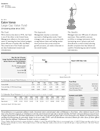
Fact Sheet
Download Fact Sheet - Last updated: Mar 31, 2024
Commentary
Download Commentary - Last updated: Mar 31, 2024
Attribution
Download Attribution - Last updated: Mar 31, 2024

Keep the income. Cut the taxes.
Download Keep the income. Cut the taxes. - Last updated: Dec 31, 2023
Municipal Bond Market Monitor
Download Municipal Bond Market Monitor - Last updated: Mar 31, 2024
Annual Report
Download Annual Report - Last updated: Sep 30, 2023
Full Prospectus
Download Full Prospectus - Last updated: Feb 1, 2024
Q1 Holdings
Download Q1 Holdings - Last updated: Dec 31, 2023
Q3 Holdings
Download Q3 Holdings - Last updated: Jun 30, 2023
Holdings - Form N-PORT

SAI
Download SAI - Last updated: Feb 1, 2024
Semi-Annual Report
Download Semi-Annual Report - Last updated: Mar 31, 2023
Summary Prospectus
Download Summary Prospectus - Last updated: Feb 1, 2024
